Engineers thoughts: Fireblocks SI partnership
To celebrate being the first accredited Fireblocks Systems Integrator (SI), we sat down with three of our engineers - Roberts, Stoyan and Yiannis - to discuss the training they received, the potential challenges one might face when trying to implement the technology, and why they’re excited about the new partnership.
Roberts Ivanov Senior Software Engineer | Stoyan Kirov Senior Software Engineer | Yiannis Marangos Senior Software Engineer |
Extensive experience using Rust for backend work and real time communication. Previously worked with Solidity/dApp development and in the IoT industry. | 10+ years of software development experience with background in Go, JS and Rust. Previously worked with distributed cryptography, confidential computing and in the fintech industry. | Seasoned professional with experience in Rust, UNIX systems and network programming. Previously worked with developing backend services on Linux embedded devices. |
Q: What did you learn during the training?
Stoyan: I was surprised by how intuitive the platform is to work with. Fireblocks has done a lot to make blockchain accessible and managed to abstract away a lot of the complicated and niche blockchain behavior.
Yiannis: I thought it was interesting to learn more about MPC-CMP and how Fireblocks used it to develop a non-custodial wallet that can interact with their cloud services. That was quite a neat solution that I hadn’t seen before.
Roberts: I agree - the MPC solution was interesting as well as learning how Fireblocks enables offline signing using optical sensors. In addition, given that I’ve previously focused more on developing dApps, the training was a good refresher on some blockchain fundamentals.
Yiannis: To expand on the MPC point - the technology essentially allows splitting the private key into multiple parts and delegating signing to 3 different entities (usually 2 servers and 1 human). No one knows the entire private key and it’s never fully constructed, but by combining all three signatures you get the final signature for the message.
In addition to that, Fireblocks uses a second layer of protection with Intel SGX (Trusted Execution Environment, or TEE). All computations and communications are done within enclaves, which makes a compromise impossible even if you had physical access to the machine.
Q: Was there something during the training that you found particularly challenging?
Roberts: The most challenging part for me was grasping TAPs (Transaction Authorization Policy), which restricts different transactions in the system. It’s a clever way of systematically authorizing various outgoing transactions from the wallet. It’s not a particularly hard concept, but there is still a learning curve to understand when and how they get executed/applied.
Yiannis: I also found TAPs quite challenging especially when trying to express some more complicated rules. TAPs are inspired by how firewall rules work, i.e. applied from top to bottom. When one rule matches, the remaining rules below are ignored. The hard part was that when applying some high-level logic, it had to be split into 2-3 rules and placed in the correct position in the list of rules.
Q: How does Fireblocks try to make the developer experience smoother?
Roberts: I have previously faced the exact issues and pain points that Fireblocks solves. For example, the process of securely managing private keys, creating a quorum for a given transaction on a shared wallet or communicating with multiple chains. Solutions in the past would span from creating on-chain wallets to custom backend services with complex chain monitoring solutions. Now we can use Fireblocks instead.
I only wish I could use it for my side hustles as well, or even as my personal crypto wallet!
Yiannis: Apart from the SDK, it also enables doing raw calls to the blockchain which is a nice feature. Raw calls are particularly helpful when the developer needs to interact with newer contracts that aren’t yet integrated into the SDK.
Q: For a customer that is looking to implement Fireblocks - What potential risks or challenges can you think of?
Stoyan: Although the Fireblocks platform has many safeguards and security features, that's also kind of its achilles heel. The ease of use can lead to a false sense of security and not correctly understanding what's going on behind the scene. This could lead to some unexpected behavior, and in the worst case put your operations at risk.
Q: Why are we (Equilibrium) the right people to help with those challenges that a customer might face when implementing Fireblocks?
Roberts: Fireblocks is a powerful tool for an expert in the domain, but it doesn’t mean that non-blockchain developers can pick it up in a single afternoon. They still need to familiarize themselves with the quirks and workings of the blockchain, which means the solutions might seem quite hard to grasp.
We at Equilibrium have seen how solutions might look both with and without Fireblocks. Therefore, we understand what’s happening under the hood of their APIs. This combined with our blockchain knowledge means we can apply the best judgment and insights of when, how and why a given piece of technology should be used.
Stoyan: I would add that we (engineers at Equilibrium) solve similar problems on a daily basis. The Fireblocks platform just speeds up development and provides the end user with a documented, good looking and easy platform to use, without us having to develop the UI from scratch.
Q: Do you have any previous experience that benefited you in the training and helped you understand how Fireblocks works?
Roberts: I have faced most of the problems that Fireblocks solves in one way or another while doing all kinds of crypto-related work for many clients during the past 2 years. This helped me understand how and why the Fireblocks solutions work the way they do and gave me even more appreciation for the engineering effort they have put into building the platform.
Stoyan: I found my previous experience from confidential computing (more precisely how Intel SGX technology works) quite helpful. Fireblocks heavily rely on it to keep services that handle sensitive data safe. I've also worked in a distributed cryptography company and the MPC protocol that Fireblock uses is very similar to what I've dealt with before, making it easier to understand.
Q: Finally, why are you excited to work with Fireblocks?
Roberts: Blockchain development is often viewed as a very difficult discipline. There are 3 components for almost every web3 project: frontend, backend, and blockchain. Blockchain was previously seen as the mighty beast that needs to be tamed and integrated into the other two (frontend and backend services). With Fireblocks, the taming of the beast becomes more structured and manageable, and the integration part is much less stressful.
Stoyan: Fireblocks adds a layer of abstraction over the blockchain, which makes development and integration with client projects way easier. Apart from that - the training was very professionally done and I’m looking forward to working with the rest of the team!
Yiannis: Fireblocks is a very nice cloud solution for non-custodial wallets. It is something that I never thought would exist, but the potential for this solution is huge and many products can be implemented with it.
Roberts: I would also love for them to target individuals. I really liked their product, and I believe there would be huge benefits for personal use. The UI is intuitive, with great visibility and oversight of what’s happening. Even a simplified version of the current product would suffice.
Thanks to all of you for taking the time to do this, and we look forward to working with Fireblocks and its partners in the future!
Originally delivered as Eiger, before Eiger and Equilibrium Labs merged to form Equilibrium.
Continue reading
July 10, 2026
Harvest now, forge at Q-day: the quantum clock is already running for blockchains
We reviewed the node implementations of the 36 largest blockchains. Two have any post-quantum code; none protect consensus. Why exposed public keys make the quantum threat a today problem, not a Q-day one.
April 21, 2026
ZAIR: Zero-Knowledge Selective Disclosure for Zcash Notes
Imagine proving you hold Zcash without revealing which note, how much, or anything else. That's no longer hypothetical. Here's how we built the first end-to-end selective disclosure tool for Sapling and Orchard
April 9, 2026
Scaling distributed systems: Eiger and Equilibrium Labs unite
we're excited to announce that Eiger and Equilibrium Labs are merging to form Equilibrium —a unified team dedicated to advancing the infrastructure that powers the decentralized web.
May 28, 2025
State of Verifiable Inference & Future Directions
Verifiable inference enables proving the correct model and weights were used, and that inputs/outputs were not tampered with. This post covers different approaches to achieve verifiable inference, teams working on this problem, and future directions.

March 25, 2025
Introducing Our Entrepreneur in Residence (EIR) Program
After 6+ years of building core blockchain infrastructure across most ecosystems and incubating ventures like ZkCloud, we're looking for ambitious pre-founders with whom to collaborate closely.

March 10, 2025
From Speculation to Utility: Next Steps For Onchain Lending Markets
Despite its promises, onchain lending still mostly caters to crypto-natives and provides little utility besides speculation. This post explores a path to gradually move to more productive use cases, low-hanging fruit, and challenges we might face.
February 18, 2025
Can Blockchains And Cryptography Solve The Authenticity Challenge?
As gen-AI models improve, it's becoming increasingly difficult to differentiate between AI- and human-generated content. This piece dives into whether cryptography and blockchains can solve the authenticity challenge and help restore trust on the Internet

February 6, 2025
Vertical Integration for both Ethereum and ETH the Asset
In recent months, lackadaisical price action and usage growing on other L1/L2s has driven a discussion on what Ethereum’s role and the value of ETH, the asset is long-term.
January 29, 2025
Equilibrium: Building and Funding Core Infrastructure For The Decentralized Web
Combining Labs (our R&D studio) and Ventures (our early-stage venture fund) under one unified brand, Equilibrium, enables us to provide more comprehensive support to early-stage builders and double down on our core mission of building the decentralized web

November 28, 2024
20 Predictions For 2025
For the first time, we are publishing our annual predictions for what will happen by the end of next year and where the industry is headed. Joint work between the two arms of Equilibrium - Engineering and Ventures.

November 7, 2024
9 + 1 Open Problems In The Privacy Space
In the third (and final) part of our privacy series, we explore nine open engineering problems in the blockchain privacy space in addition to touching on the social/regulatory challenges.
October 15, 2024
Aleo Mainnet Launch: Reflecting On The Journey So Far, Our Contributions And Path Ahead
Equilibrium started working with Aleo back in 2020 when ZKPs were still mostly a theoretical concept and programmable privacy in blockchains was in its infancy. Following Aleo's mainnet launch, we reflect on our journey and highlight key contributions.
August 12, 2024
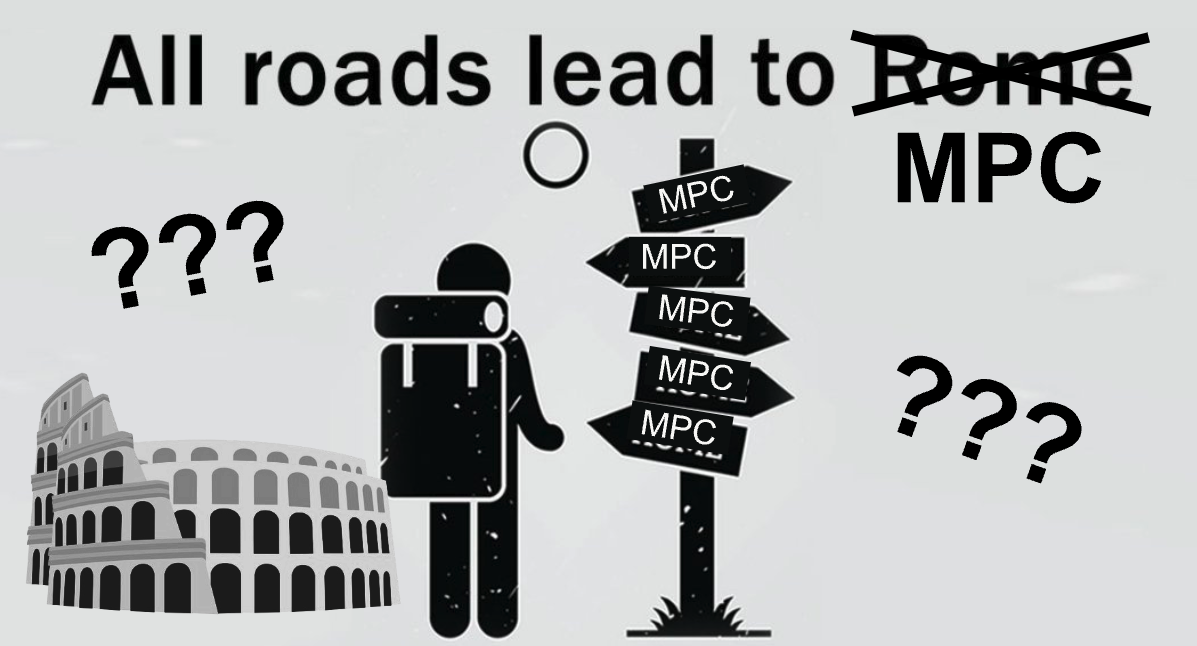
Do All Roads Lead To MPC? Exploring The End-Game For Privacy Infrastructure
This post argues that the end-game for privacy infra falls back to the trust assumptions of MPC, if we want to avoid single points of failure. We explore the maturity of MPC & its trust assumptions, highlight alternative approaches, and compare tradeoffs.
August 1, 2024
Working on Aptos: Insights into Mutation Testing and Specification Assurance
July 23, 2024
Equilibrium brings Move to Polkadot
July 23, 2024
Releasing Lumina.rs - Directly verify Celestia in your browser
We're excited to release Lumina. Go to https://lumina.rs/ and run a Celestia light node in the browser. By running Lumina you synchronize with the network, sample data availability, directly verify correctness and contribute to the network health
June 12, 2024
What Do We Actually Mean When We Talk About Privacy In Blockchain Networks (And Why Is It Hard To Achieve)?
An attempt to define what we mean by privacy, exploring how and why privacy in blockchain networks differs from web2, and why it's more difficult to achieve. We also provide a framework to evaluate different approaches for achieveing privacy in blockchain.

April 9, 2024
Will ZK Eat The Modular Stack?
Modularity enables faster experimentation along the tradeoff-frontier, wheras ZK provides stronger guarantees. While both of these are interesting to study on their own, this post explores the cross-over between the two.
January 16, 2024
Nebula for Soroban: Simplifying Contract Execution
January 16, 2024
Equilibrium is taking over responsibility for Beerus StarkNet Light Client
December 14, 2023
Enhancing Rust RPC Client and Nodes for Celestia Network
December 11, 2023
Introducing the MoveVM Substrate Pallet
October 23, 2023
Unveiling the Zcash UniFFI Library
October 5, 2023
Overview of Privacy Blockchains & Deep Dive Of Aleo
Programmable privacy in blockchains is an emergent theme. This post covers what privacy in blockchains entail, why most blockchains today are still transparent and more. We also provide a deepdive into Aleo - one of the pioneers of programmable privacy!
September 18, 2023
Securing cross-chain communication from Ethereum to the Internet Computer with an on-chain Light Client
September 4, 2023
Elusiv: Bringing Privacy To Solana
July 25, 2023
Introducing OpEVM: The Next Generation Optimistic EVM Rollup
June 7, 2023
Equilibrium Becomes the First Accredited Systems Integrator for Fireblocks
March 12, 2023
2022 Year In Review
If you’re reading this, you already know that 2022 was a tumultuous year for the blockchain industry, and we see little value in rehashing it. But you probably also agree with us that despite many challenges, there’s been a tremendous amount of progress.

May 31, 2022
Testing the Zcash Network
In early March of 2021, a small team from Equilibrium applied for a grant to build a network test suite for Zcash nodes we named Ziggurat.
June 30, 2021
Connecting Rust and IPFS
A Rust implementation of the InterPlanetary FileSystem for high performance or resource constrained environments. Includes a blockstore, a libp2p integration which includes DHT contentdiscovery and pubsub support, and HTTP API bindings.
June 13, 2021
Rebranding Equilibrium
A look back at how we put together the Equilibrium 2.0 brand over four months in 2021 and found ourselves in brutalist digital zen gardens.
January 20, 2021
2021 Year In Review
It's been quite a year in the blockchain sphere. It's also been quite a year for Equilibrium and I thought I'd recap everything that has happened in the company with a "Year In Review" post.